Introduction: When my hot flashes got worse…because of my housework
At 52, I thought I was experiencing menopause. The hot flashes, the night sweats, the irritability… I had read all the books, tried sage, red clover, the supplements.
But something was wrong.
My symptoms were getting worse instead of better. Especially on days when I was cleaning. Coincidence?
No.
Discussing with my naturopath, I discovered a term that changed everything: endocrine disruptors. These chemical substances present in our everyday products that imitate or block our hormones.
And guess where we find the most of them? In household products.
According to INSERM, postmenopausal women are particularly vulnerable to these substances. Our hormonal system, already in full upheaval, is hypersensitive to external chemical signals.
It took me 6 months to clean up my house. Result: my hot flashes decreased by 40%. Without changing treatment. Just by eliminating toxins from my environment.
Here’s everything I learned.
—
Understand: Why menopause makes you more vulnerable to toxins

The hormonal system in transition
At menopause, your ovaries drastically reduce the production of estrogen and progesterone. Your body is seeking a new balance.
The problem: Endocrine disruptors (EDs) send contradictory signals to your body. Some mimic estrogens (xenoestrogens), others block your hormone receptors.
Result: your hormonal system, already weakened, no longer knows where to turn.
The most common EPs in your home
| Substance | Domestic sources | Hormonal impact |
| Phthalates | Perfumes household products, plastics | Disturbing estrogens |
| Bisphenol A/S | Plastic containers, receipts | Mimic estrogen |
| Parabens | Cosmetics, certain detergents | Estrogenic activity |
| Alkylphenols | Detergents, industrial cleaners | Potent xenoestrogens |
| Triclosan | Antibacterial soaps | Thyroid disruptor |
| Synthetic musks | Room fragrances, laundry detergents | Fat accumulation |
What the science says
An INSERM study (2021) shows that exposure to ED can:
“Women in perimenopause and menopause constitute a population particularly at risk from endocrine disruptors. Their window of hormonal vulnerability is wide open. » – Dr Patrick Fénichel, endocrinologist, Nice University Hospital
—
The 10 actions to protect your hormones at home
1. Eliminate synthetic fragrances from your products
Why it’s crucial: The words “parfum” or “fragrance” on a label often hide dozens of chemical molecules, including phthalates known to be endocrine disruptors.
What I did:
Natural alternative: To perfume naturally, a few drops of true lavender essential oil in the laundry rinse water. Or just… nothing. A clean house has no odor.
—
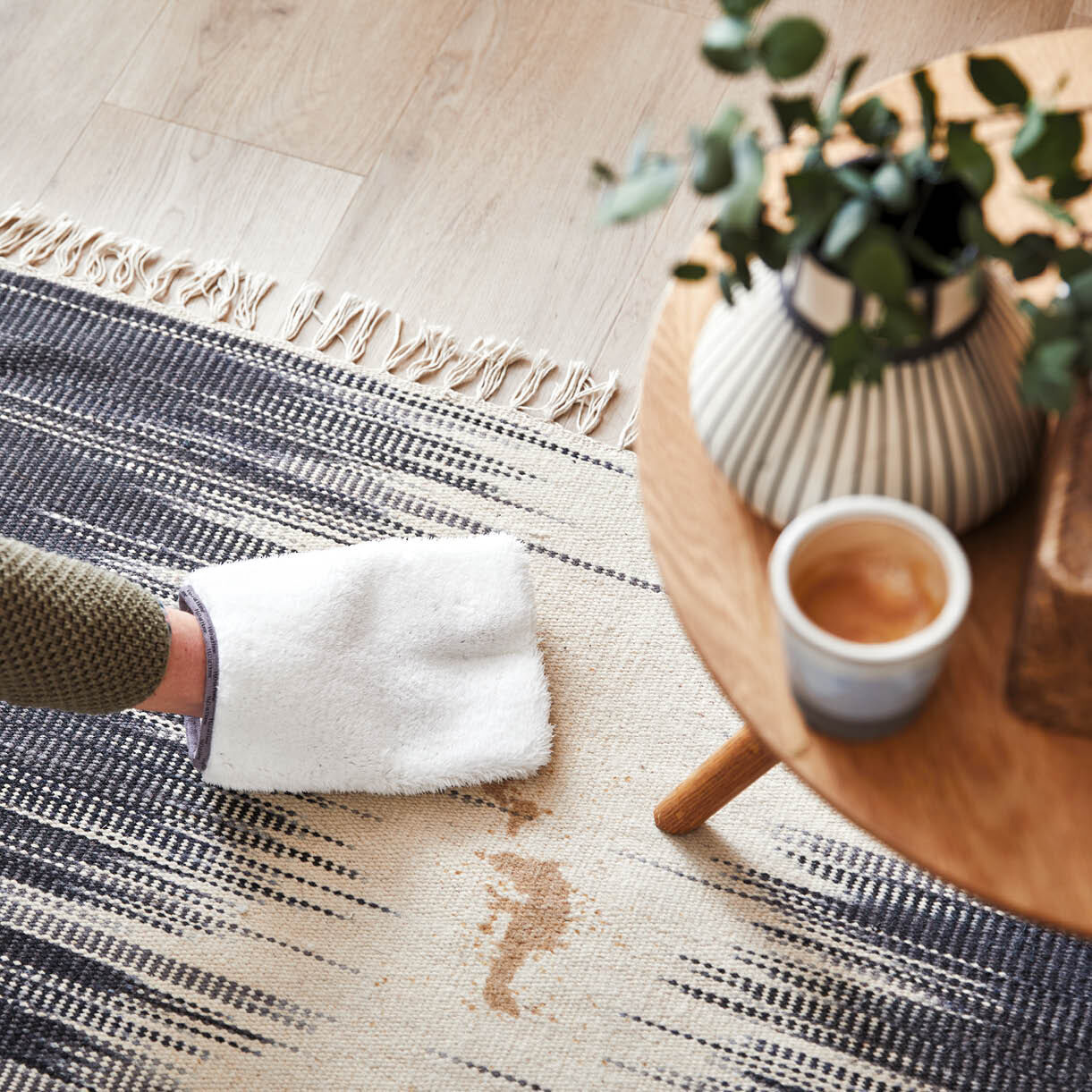
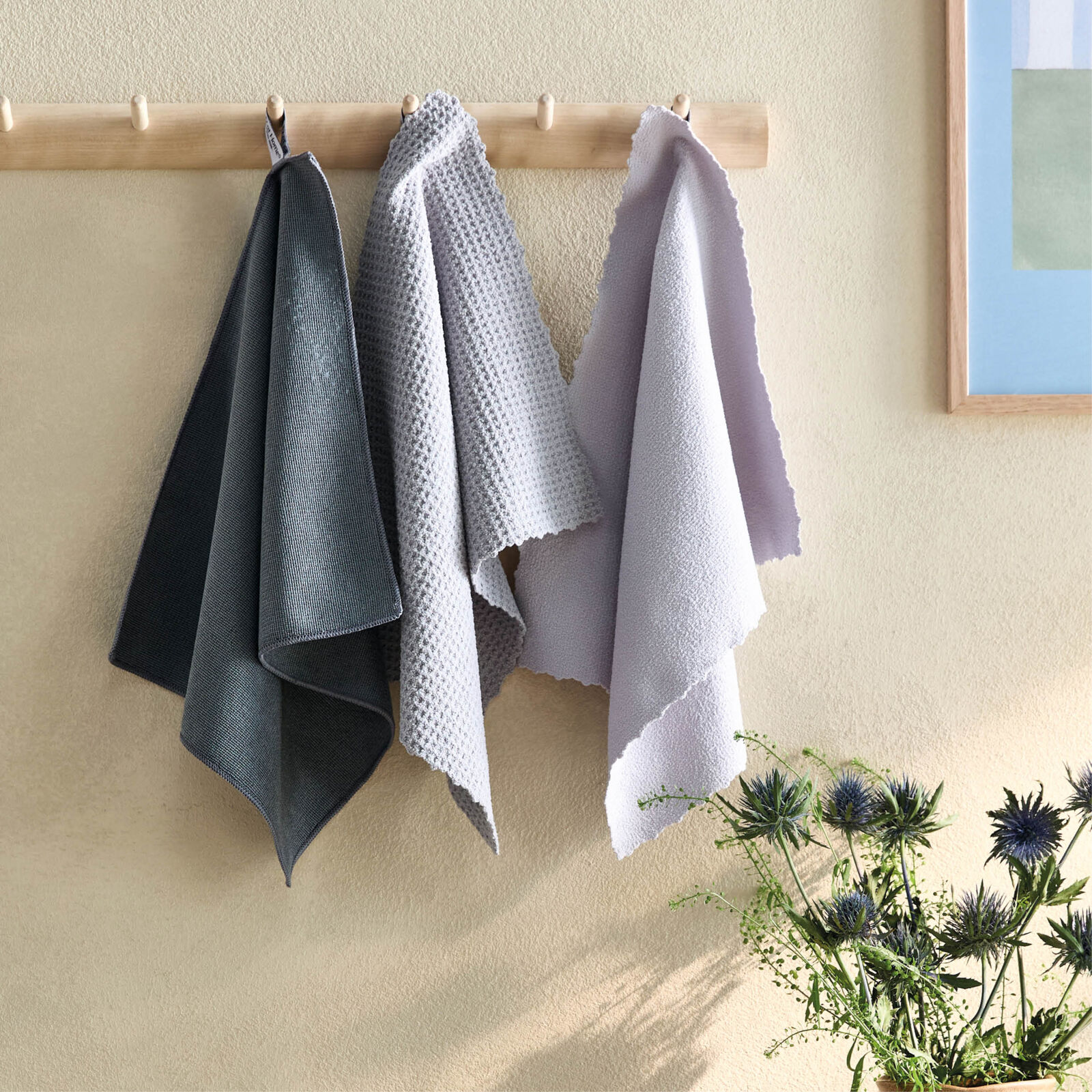
2. Switch to high-performance microfibers
The principle: Cleaning with pure water with quality microfibers eliminates the need for chemicals in 90% of cases.
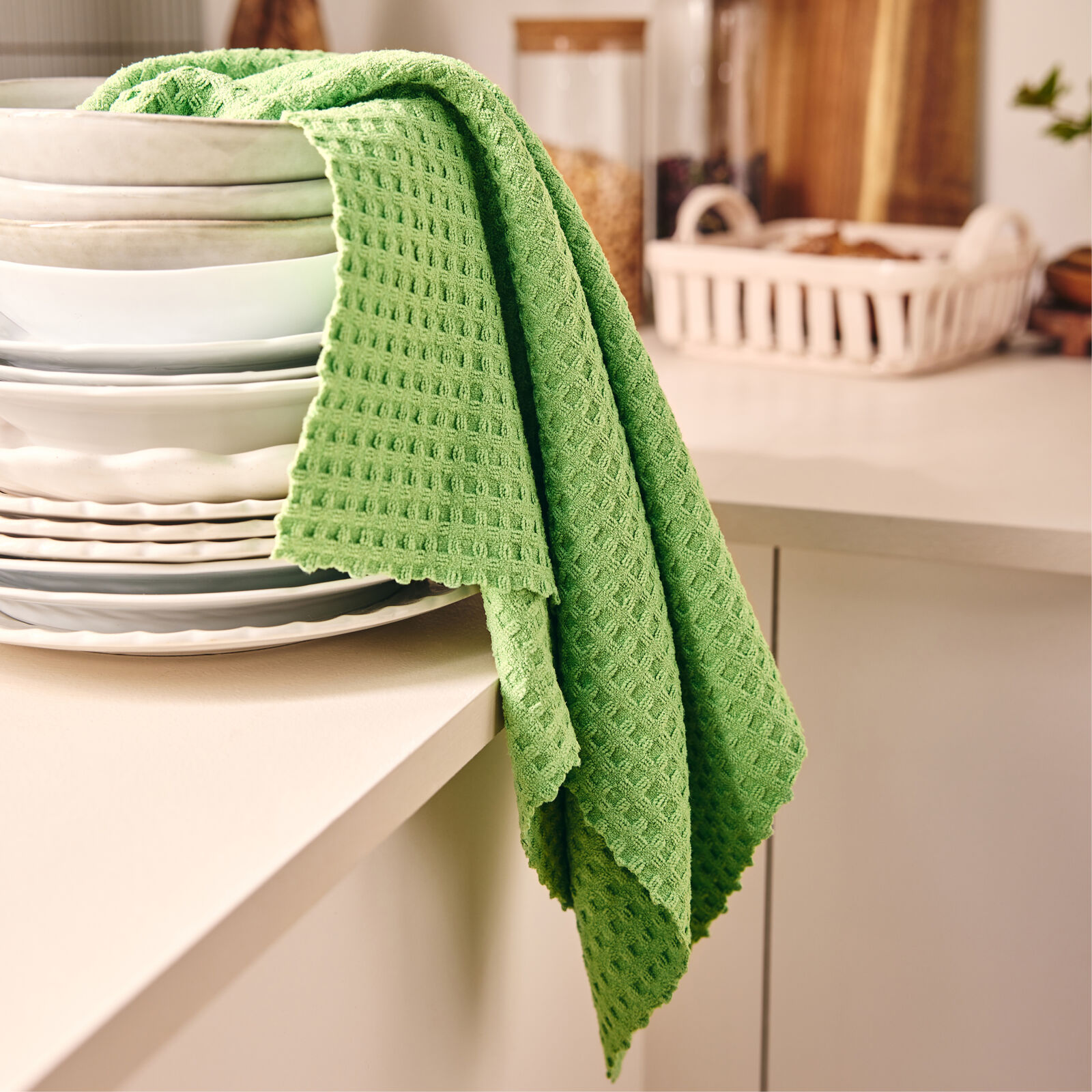
My experience: Since using H2O at Home microfibers, I no longer buy multi-surface spray, window cleaner, or dust remover. Water + microfiber = impeccable surfaces.
Menopause advantage: Zero exposure to VOCs during cleaning = fewer hot flashes triggered by chemical irritants.
Tip: Invest in quality. Low-end microfibers lose their effectiveness within a few months. H2O microfibers last for years and can be washed at 60°C (important for hygiene).
—
3. Ban plastic from your kitchen
The problem: Plastics release endocrine disruptors, especially when heated. Reheat in the microwave in plastic = bisphenol bath.
Concrete actions:
Menopause Focus: Bisphenol A (and its replacements BPS, BPF) mimic estrogens. During menopause, this is exactly what you DO NOT need.
—
4. Choose a clean laundry detergent
What to avoid:
What I recommend:
Rinse: Add an extra rinse cycle if you are sensitive. Laundry residue on clothes is in constant contact with your skin.
—
5. Ventilate strategically (but correctly)
Why: Indoor air concentrates PE volatilized by furniture, paints and products. Aerating dilutes them.
Optimal protocol:
Beware of hot flashes: In summer, ventilate early in the morning (6 a.m.-8 a.m.) when the air is cool. Avoid opening during hot hours if the puffs bother you.
—
6. Purify the air without chemicals
False good ideas:
Real solutions:
My tip: A bowl of baking soda in each room absorbs odors without emitting anything.
—
7. Rethink your bathroom
Hotspot in PE: The bathroom has cosmetics, hygiene products and cleaners. It is often the “busiest” room in your house.
Natural cleaning:
Cosmetics: Simplify! During menopause, the skin becomes more reactive. Fewer products = less exposure to ED.
—
8. Treat your bedding naturally
The issue: You spend 8 hours a night with your face on your pillow. Scented laundry detergent residue, dust mites and their droppings are in direct contact with your respiratory tract.
Anti-PE protocol for bedding:
1. Fragrance-free hypoallergenic laundry detergent
2. Double rinse
3. Anti-mite covers (natural material, not plasticized)
4. Monthly steam or bicarbonate cleaning
Menopause Focus: Night sweats create a humid environment conducive to mites. Air your bed every morning 30 minutes before doing so.
—
9. Beware of “eco” marketing
Greenwashing: Many products advertise “natural”, “ecological” or “organic” without really being so.
How to check:
My advice: The simplest thing is to use as few products as possible. Water + quality microfiber cover 80% of cleaning needs.
—
10. Create your minimalist anti-PE household kit
Everything you need:
| Product | Usage | Purchase frequency |
| H2O at Home Microfibers | Multi-surfaces, windows, floor | Every 3-5 years |
| White vinegar | Descaling, light disinfection | Monthly |
| Bicarbonate | Deodorizer, mild abrasive | Monthly |
| Black soap | Floors, degreasing | Quarterly |
| Marseille soap | Homemade laundry detergent, stain remover | Quarterly |
Budget: Around €50/year compared to €200-300 for conventional products. And zero endocrine disruptors.
—
Transition planning: 4 weeks for a healthy home

Week 1: Inventory
Week 2: Cooking
Week 3: The bathroom and the bedroom
Week 4: Consolidation
—
Reader testimonials
“At 54, I had hot flashes every hour. My doctor wanted to put me on HRT. I first tried to clean up my house. In 2 months, my flushes were reduced by half. I am still not taking hormonal treatment. » – Véronique, 55 years old
“I didn’t think my household products could impact my hormones. Since I cleaned with water and microfiber, I sleep better and have fewer night sweats. Coincidence? My endocrinologist doesn’t think so. » – Martine, 51 years old
—
FAQ: Menopause and endocrine disruptors

Can endocrine disruptors really affect menopause?
Yes, it is scientifically documented. PE can disrupt the hormonal system at any age, but women in perimenopause and menopause are particularly vulnerable because their hormonal balance is already unstable.
Should we throw everything away at once?
No, proceed gradually. Finish your current products and then replace them with natural alternatives. The abrupt transition is discouraging and costly.
Are “organic” products guaranteed to be PE-free?
Not automatically. “Organic” is often about the origin of the ingredients, not the absence of PE. Check the labels (Ecocert, Nature & Progrès) and ingredient lists.
Does it cost more?
In the short term, certain investments (quality microfibers, glass containers). In the long term, it is very economical: vinegar + bicarbonate + microfibers cost €50/year vs. €200-300 for traditional products.
How long before you see an improvement in symptoms?
Variable depending on the woman. Some notice a difference in 2-4 weeks, others in 2-3 months. The body needs time to eliminate accumulated PE (they are stored in fat).
Are my children and my husband also affected?
Yes! EDs affect everyone. Children are even more sensitive to it. Cleaning up your home benefits the whole family.
—
Conclusion: Your hormones deserve a clean home
Menopause is difficult enough without your home environment adding to it.
What I learned from cleaning up my house:
My number 1 tip? Start with microfibers. It’s the simplest change with the most immediate impact. No more need for chemical sprays = less exposure to PE during cleaning.
I have been using H2O at Home microfibers for 4 years. They have transformed the way I clean and, indirectly, my menopause.
Your hormones will thank you.
—
💰 Calculate your savings!
Did you know that natural cleaning can save you €190/year while improving your health?
Sources

—
*Article written by Maélis T., naturopath, 54 years old, in peaceful post-menopause. Last updated: December 2024.*
💊 Experience menopause peacefully
Natural supplements to relieve the symptoms of menopause.
Affiliate link – WeightWorld offers quality natural supplements.
Read also
- Tinnitus: 7 natural approaches to find silence
- Lose Weight Naturally: 12 Tips That Really Work
- Chronic fatigue: 10 natural solutions to regain your energy
- Insomnia: 7 natural treatments to get back to sleep
Discover H2O at Home products


Official H2O at Home images – h2oathome.com