Introduction: When my house made me sick
My name is Maélis, and for years, I believed that my allergies were inevitable. Cascading sneezes every morning, red eyes, runny nose… I put it down to pollen, dust mites, “fragility”.
Until the day I cleaned a friend’s house.
She only used water and microfibers. No spray, no bleach, no “fresh spring scent.” And there, miracle: not a single sneeze all afternoon.
The click.
I started to investigate. And what I discovered shocked me: according to ANSES, 70% of common household products contain irritating or allergenic substances. These famous VOCs (Volatile Organic Compounds) that we breathe in with our lungs believing they are “cleaning up” our interior.
Today, after 3 years of transition to 100% natural cleaning, my allergic attacks have decreased by 80%. Without medication. Just by changing the way I clean.
In this article, I share everything with you: the 10 solutions that really work, the mistakes to avoid, and the alternatives that I have personally tested.
—
Why your household products make your allergies worse

The culprits hidden in your cupboards
Before we talk about solutions, let’s understand the problem. Here’s what most household products contain:
| Substance | Where is it found | Effects on allergies |
| Formaldehyde | Air fresheners, multi-surface cleaners | Respiratory tract irritation, chronic rhinitis |
| Limonene | “Lemon scent” products | Recognized skin and respiratory allergen |
| Ammonia | Window cleaners, degreasers | Mucous burns, asthma attacks |
| Phthalates | Synthetic perfumes | Endocrine disruptors, allergic sensitization |
| Chlorine (bleach) | Disinfectants | Bronchial irritation, worsening allergies |
What the science says
A study published in the American Journal of Respiratory and Critical Care Medicine (2018) followed 6,000 people for 20 years. Shocking result: regular use of cleaning sprays is equivalent, for the lungs, to smoking 20 cigarettes a day.
ANSES (National Health Safety Agency) regularly warns about indoor air quality. Their observation: the air in our homes is 5 to 10 times more polluted than the air outside, mainly because of household products.
“People with allergies or asthma are particularly vulnerable to emissions from household products. The first recommendation is to drastically limit their use. » – Dr Fabien Squinazi, medical biologist, former director of the Hygiene Laboratory of the City of Paris
—
The 10 natural solutions that really work
1. High-performance microfiber: the game-changer
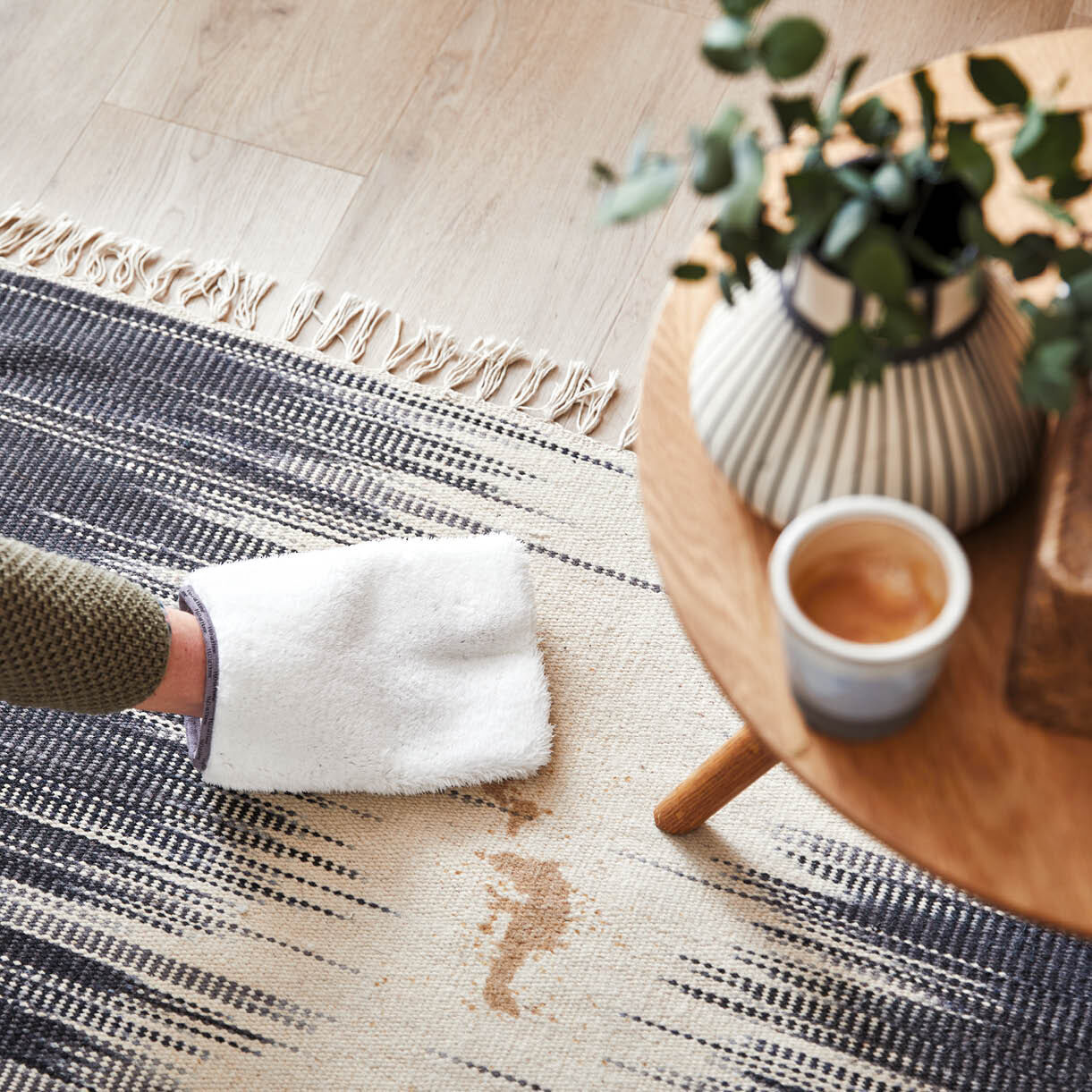
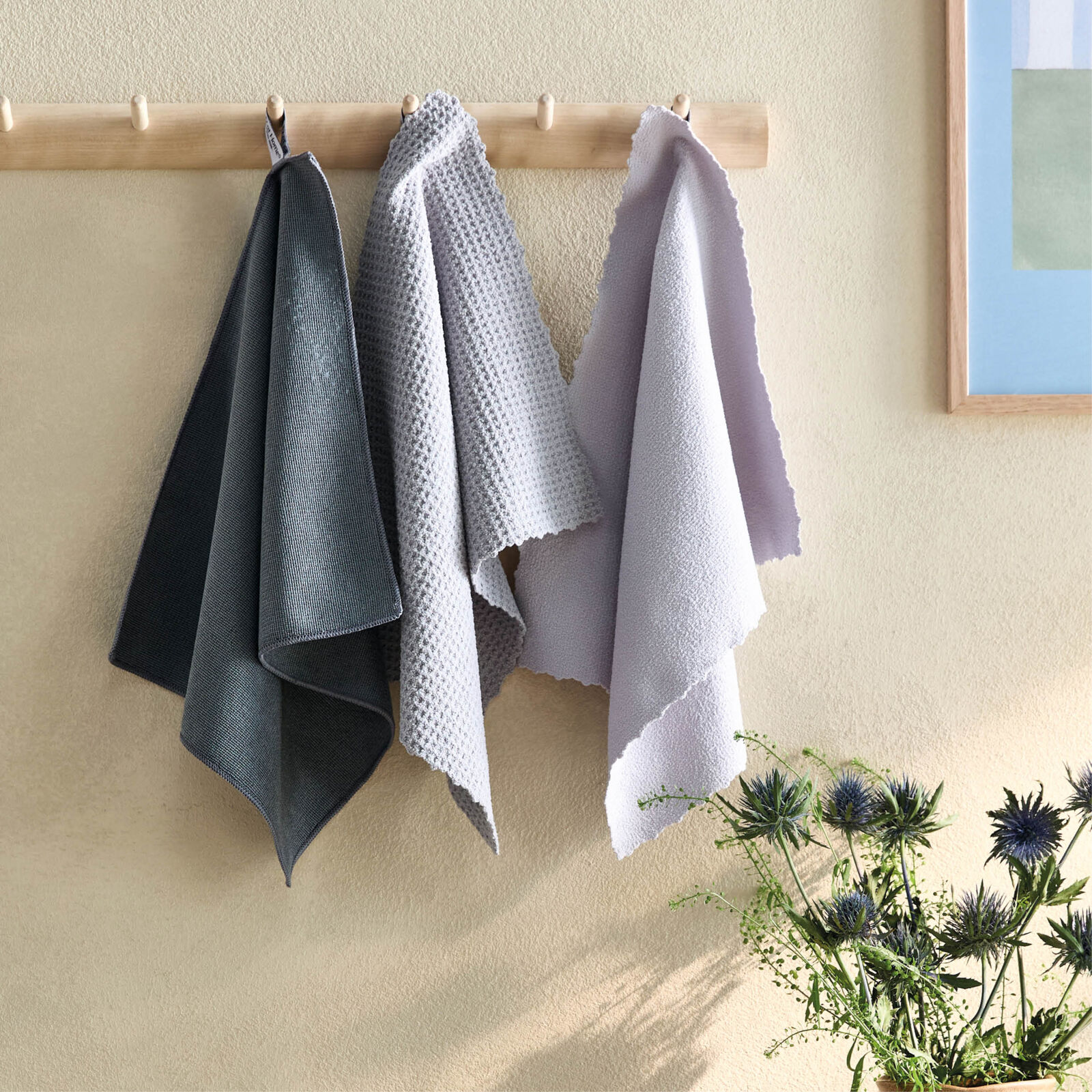
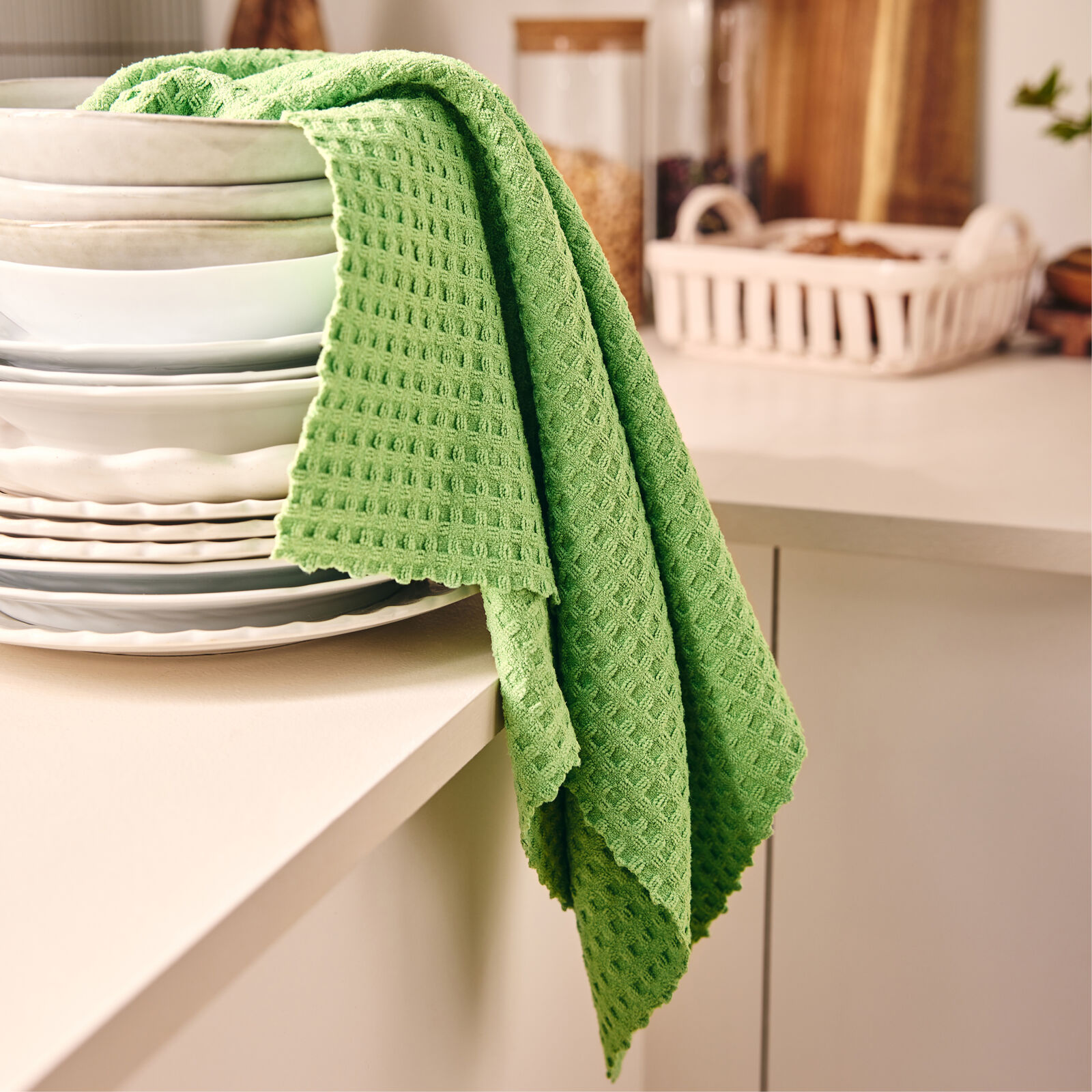
Why it works: Quality microfiber can capture a significant portion of bacteria (according to lab tests) and allergens with water alone. The fibers, 100 times finer than a hair, trap dust instead of dispersing it into the air.
My experience: This is THE solution that changed everything for me. More spray = more irritation. And contrary to popular belief, it is more effective than chemicals in eliminating allergens.
How to use it:
—
2. White vinegar: anti-limescale for allergy sufferers
Why it works: Natural acetic acid, it dissolves limescale (bacterial nest) without emitting VOCs. Bonus: its smell disappears as it dries.
Effective dosage:
Caution: Never mix with bicarbonate (reaction = loss of effectiveness) or with bleach (toxic gas!).
Tip: To reduce the smell, macerate organic citrus peels in vinegar for 2 weeks.
—
3. Baking soda: the allergen absorber
Why it works: Its micro-crystals absorb odors and allergens. Slightly abrasive, it cleans without scratching.
Anti-allergy applications:
My monthly protocol:
1. Sprinkle the mattress generously
2. Leave to act for 2-4 hours
3. Vacuum with a HEPA vacuum
4. Clean the mattress with damp microfiber
Result: my waking up with a stuffy nose has disappeared.
—
4. The HEPA vacuum cleaner: essential for allergy sufferers
Why it works: HEPA (High Efficiency Particulate Air) filters retain 99.97% of 0.3 micron particles – including pollen, dust mites and their droppings.
Selection criteria:
Mistake to avoid: A traditional vacuum cleaner without a HEPA filter spits allergens into the air. You clean up…and you disperse the problems.
—
5. steam: a complementary option for mite control
Why it works: At 100°C, steam (if using a separate steam cleaner) can help reduce mites, bacteria and mold. with fewer chemicals.
Where to use it:
My opinion: Profitable investment for severe allergies. I use it monthly on all bedding.
—
6. Essential oils: with caution!
Caution: Contrary to popular belief, essential oils can aggravate respiratory allergies. They emit natural but irritating VOCs.
What works (in limited use):
What to avoid:
—
7. Strategic ventilation: the forgotten basis
Why it works: Renewing the air dilutes indoor pollutants. ANSES recommends 10-15 minutes morning and evening.
Optimal protocol:
In town: Favor off-peak hours (6 a.m.-8 a.m., after 8 p.m.) to avoid automobile pollution.
—
8. Black soap: the degreaser for allergy sufferers
Why it works: 100% vegetable (olive or flax), it powerfully degreases without emitting irritating substances.
Uses:
Preferred quality: Black soap with olive oil, no added fragrance. Avoid “scented” versions that contain allergens.
—
9. The land of Sommières: the miracle absorbent
Why it works: This natural clay absorbs grease and odors without any chemical emissions.
Applications:
Instructions for use:
1. Sprinkle generously on the stain
2. Leave to act for 2-12 hours depending on age
3. Vacuum or brush
—
10. Minimalist cleaning: less is more
The principle: Reduce the number of products = reduce exposure to allergens.
My basic kit (everything you need):
5 products vs 15-20: This is the revolution. Fewer cluttered cupboards, less expenses, fewer allergies.
—
Comparison table: Classic products vs. Natural alternatives

| Usage | Classic product | Allergic risk | Natural alternative | Efficiency |
| Multi-surface | Mr Clean Spray | High (VOC, fragrances) | Microfiber + water | ⭐⭐⭐⭐⭐ |
| Windows | Ajax Windows | Medium (ammonia) | Special microfiber for windows | ⭐⭐⭐⭐⭐ |
| Disinfection | Bleach | Very high | Steam / vinegar | ⭐⭐⭐⭐ |
| Descaling | Antikal | High (strong acids) | White vinegar | ⭐⭐⭐⭐ |
| Floor | Swiffer | Medium (fragrances) | Microfiber soil + water | ⭐⭐⭐⭐⭐ |
| Air freshener | Febreze | Very high (phthalates) | Bicarbonate / aeration | ⭐⭐⭐⭐ |
| Dust | Classic duster | Medium (dispersion) | Dry microfiber | ⭐⭐⭐⭐⭐ |
—
Transition protocol: week by week
Week 1: The audit
Week 2: Progressive replacement
Week 3: Deepening
Week 4: Consolidation
—
FAQ: Your questions about allergies and natural cleaning

Is cleaning with water alone really effective against bacteria?
Yes, provided you use quality microfibers. Studies show that high-performance microfibers eliminate a significant portion of bacteria (lab tests) mechanically, without disinfectant. It is the friction of the fibers that releases and traps the micro-organisms.
Can I use essential oils if I am allergic?
With great caution. EOs are concentrates of volatile molecules which can irritate the respiratory tract. If you have asthma or a respiratory allergy, avoid diffusion. Prefer a few drops in the washing water or on a cotton pad in the vacuum cleaner.
Does white vinegar damage surfaces?
Avoid on: marble, limestone, aluminum, and silicone joints. For everything else (stainless steel, glass, plastic, tiles, earthenware), it’s risk-free. If in doubt, test on a hidden area.
How long before I see an improvement in my allergies?
Most people see improvement within 2-4 weeks. Residual VOCs take a few days to evacuate, then your respiratory system gradually “recovers.”
Do microfibers wear out quickly?
My partner/family does not want to change products. What to do?
Start with YOUR space: your bedroom, your office. Show the results. Often, when others see the reduction in your symptoms (and the savings), they naturally follow.
—
Conclusion: Take back control of your indoor air
Your allergies are not inevitable. In 70% of cases, they are aggravated – or even caused – by the products you use to “clean” your home.
The solution is not to live in dirt. It’s cleaning smart, with methods that eliminate allergens instead of adding them.
What I learned in 3 years of transition:
My advice? Start with ONE change this week. Replace your multi-surface spray with a damp microfiber. Observe. You will be surprised.
Finally breathe at home.
—
💰 Calculate your savings!
Did you know that natural cleaning can save you €190/year while improving your health?
Sources

—
*Article written by Maélis T., naturopath and former chronic allergy sufferer. Last updated: December 2024.*
💊 Strengthen your natural defenses
Vitamins and minerals to support your immune system.
Affiliate link – WeightWorld offers quality natural supplements.
Read also
- Menopause: 10 Anti-Endocrine Disruptor Actions
- Tinnitus: 7 natural approaches to find silence
- Chronic fatigue: 10 natural solutions to regain your energy
- H2O at Home Christmas Gifts: The Anti-Stress Selection for a…
Discover H2O at Home products


Official H2O at Home images – h2oathome.com